What Is Resistant Starch? Industrial Benefits & Applications
The growing focus on gut health, blood sugar control, and healthy nutrition is making resistant starch an increasingly valuable ingredient in modern food products. With its function as a natural prebiotic and a wide range of metabolic benefits, resistant starch is being widely applied in both nutrition and food processing industries. Join Hùng Duy Starch to explore the concept, classification, and benefits of resistant starch – as well as advanced RS4 solutions for businesses.
1. What is resistant starch?
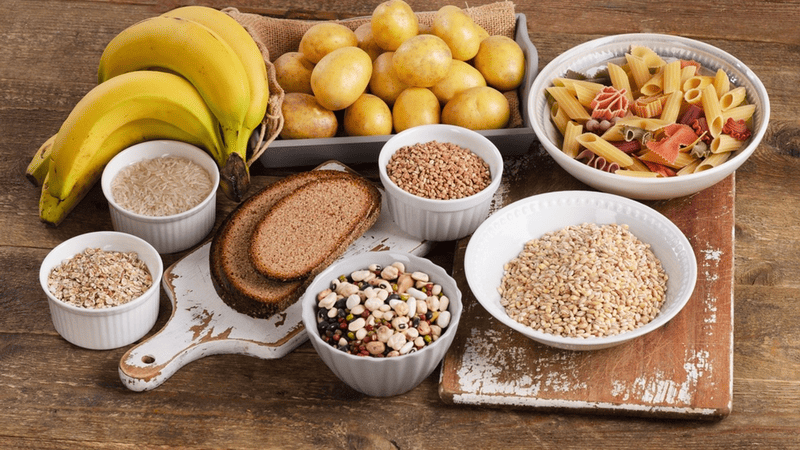
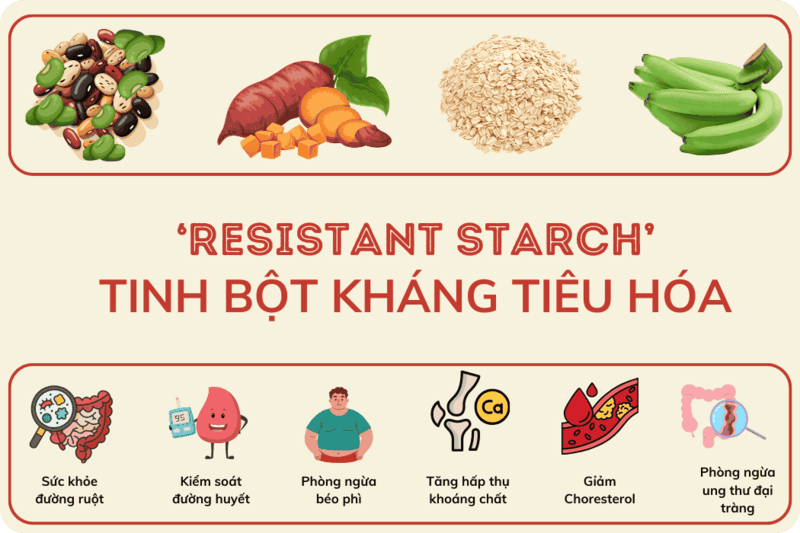
Resistant starch (RS) is a type of complex carbohydrate derived from plants, naturally found in many foods such as potatoes, rice, corn, wheat, bread, and root vegetables. Unlike regular starch, resistant starch is not broken down into glucose by digestive enzymes in the small intestine, allowing it to pass intact into the large intestine.
There, beneficial bacteria ferment resistant starch to produce short-chain fatty acids (SCFAs) such as butyrate, propionate, and acetate. These SCFAs play an important role in:
- Maintaining the health of the intestinal lining and strengthening the gut barrier.
- Promoting the growth of beneficial bacteria, balancing the gut microbiota, and improving overall digestion.
In terms of energy, resistant starch provides approximately 2.5 calories per gram, lower than regular starch (4 calories per gram), helping with weight management, stabilizing blood glucose levels, and reducing the risk of chronic diseases such as type 2 diabetes and cardiovascular diseases. It can also be incorporated into processed foods as a prebiotic fiber to enhance gut health benefits.
2. Types of resistant starch
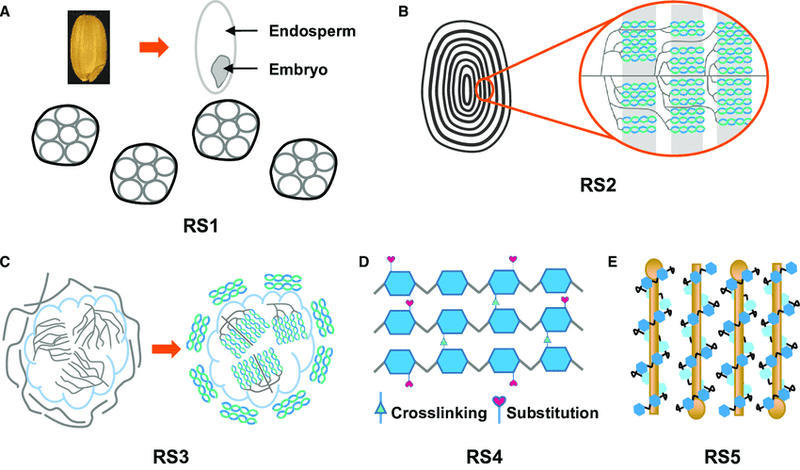
Resistant starch is classified into five main types (RS1–RS5), each with distinct origins, structures, and resistance mechanisms:
2.1. Resistant Starch Type 1 (RS1)
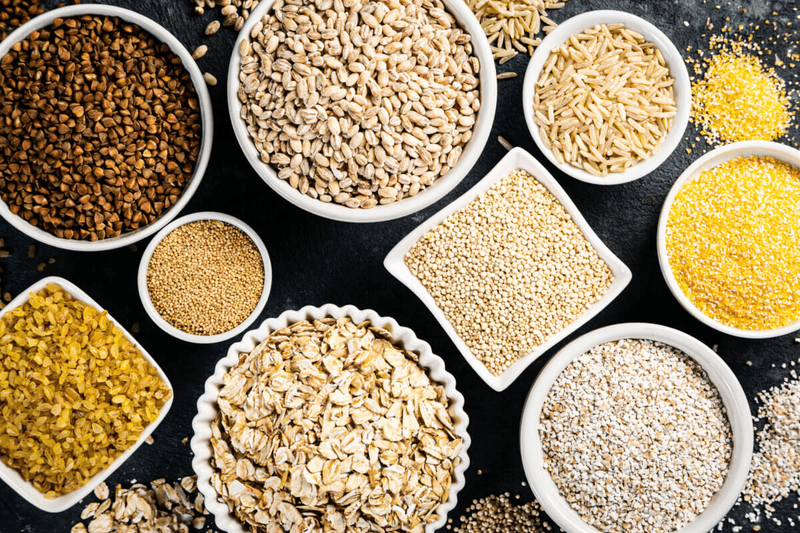
RS1 is starch that resists digestion in the small intestine because carbohydrates are physically trapped within plant cell walls or protein matrices, making them inaccessible to digestive enzymes. RS1 is naturally found in foods such as:
- Whole or coarsely ground grains such as oats, wheat, and barley
- Legumes such as peas, black beans, lentils, and chickpeas
- Nuts and seeds
Note: Processing methods such as grinding, milling, thorough cooking, or industrial processing can break down cell structures, reducing RS1 content and increasing carbohydrate digestibility.
2.2. Resistant Starch Type 2 (RS2)
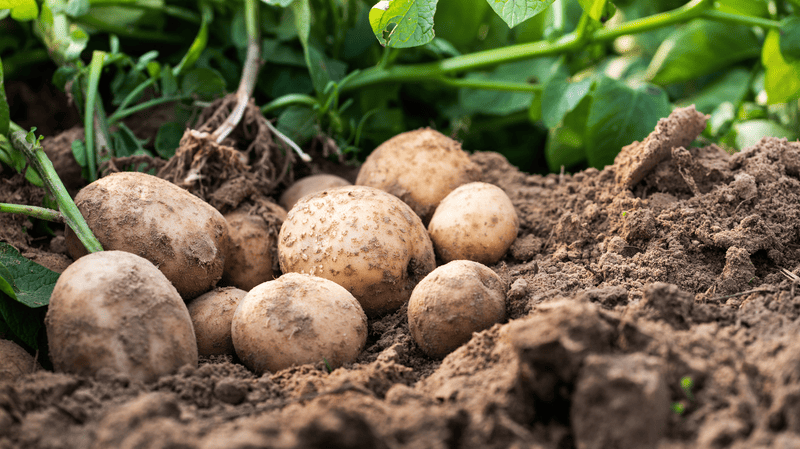
RS2 is found in starch granules with high amylose content and a tightly packed natural crystalline structure, making them resistant to amylase digestion. This type is commonly found in:
- Raw potatoes
- Green or unripe bananas
- Certain legumes and high-amylose corn
Note: Cooking can reduce the resistance of RS2. However, some RS2 sources such as green banana flour are heat-stable and can retain resistant starch during processing.
2.3. Resistant Starch Type 3 (RS3)
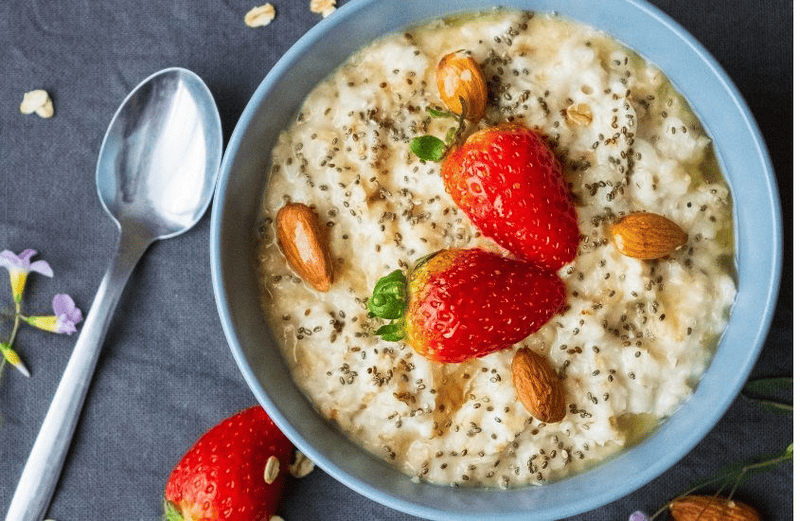
RS3 forms when starchy foods are cooked and then cooled, causing glucose chains to recrystallize and become resistant to digestion. Common sources include:
- Cooked and cooled rice, potatoes, pasta, and oats
- Cooked and cooled bread and cereals
2.4. Resistant Starch Type 4 (RS4)
RS4 is a man-made resistant starch, chemically or enzymatically modified (cross-linking, esterification, phosphorylation) to resist digestion. RS4 is commonly added to:
- Bread, diet foods, cereals, and processed foods
- Commercial modified starch products
Thanks to its stable structure and good viscosity, RS4 improves texture formation, water retention, and structural stability in various food formulations. Notably, cross-linked and phosphorylated RS4 has been approved by the FDA as a dietary fiber on food labels in the United States, based on evidence of its ability to support postprandial insulin response management.
2.5. Resistant Starch Type 5 (RS5)
RS5 is formed when amylose complexes with lipids or proteins, creating a structure that resists digestion in the small intestine. Common sources include:
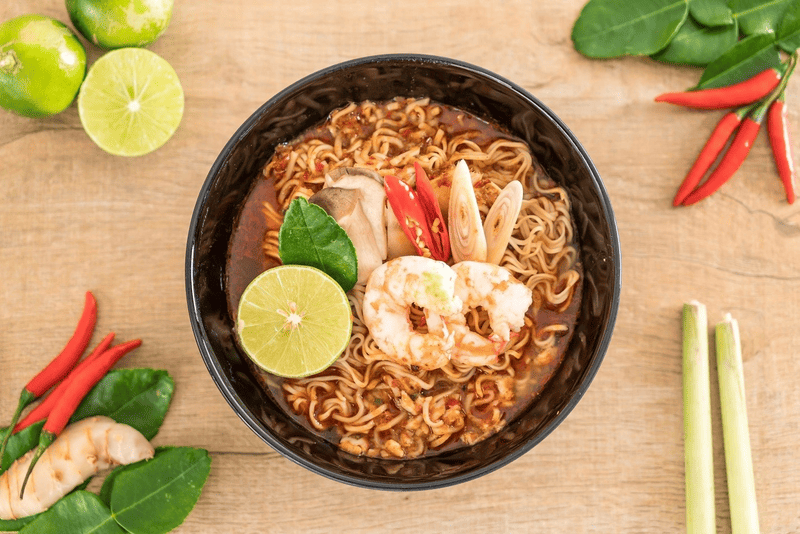
- Rice noodles, instant noodles, and starch-based products combined with lipids
- Processed starch where amylose is combined with fatty acids or proteins
RS5 can form during frying or stir-frying in oil. However, this type is less common and is still being studied to fully understand its effects and health impacts.
3. Health benefits of resistant starch
- Improves gut health: Resistant starch serves as food for beneficial bacteria such as Bifidobacteria and Lactobacillus. Fermentation produces butyrate, acetate, and propionate, which nourish intestinal cells, reduce inflammation, improve gut lining function, enhance nutrient absorption, lower cholesterol, and help prevent constipation.
- Enhances satiety and supports weight management: Due to its resistance to digestion, it takes longer for the body to break down, promoting a longer feeling of fullness and reducing appetite. It also provides fewer calories than regular starch, helping control caloric intake and support weight loss and body maintenance.
- Supports blood sugar control and insulin sensitivity: Resistant starch does not increase glucose levels in the small intestine, helping prevent rapid spikes in blood sugar after meals. SCFAs produced during fermentation may improve insulin sensitivity, reducing the risk of type 2 diabetes and metabolic disorders.
- Supports the immune system: Approximately 70% of the immune system is located in the gut. By maintaining a healthy microbiome, resistant starch indirectly enhances immunity and protects the body from pathogens.
- Reduces the risk of constipation and hemorrhoids: Resistant starch softens stool, stimulates bowel movements, and improves frequency and quality of defecation, helping prevent constipation and related conditions such as hemorrhoids.
- Reduces the risk of colorectal cancer: SCFAs, particularly butyrate, lower intestinal pH and improve the gut environment, limiting the accumulation of bile acids that can damage DNA, thereby helping prevent colorectal cancer.
- Helps reduce cholesterol and improve inflammatory markers: Some studies suggest that resistant starch can lower LDL cholesterol and partially reduce inflammatory markers such as IL-6, TNF-alpha, and CRP, contributing to cardiovascular protection and overall health.
4. A trusted manufacturer and supplier of RS4 resistant starch
Hùng Duy Starch is proud to be a pioneer in Vietnam in the production of high-quality modified tapioca starch. With over 55 years of experience, the company has developed a modern, high-tech manufacturing system, directly operating production from 100% fresh cassava roots sourced in Tây Ninh, Vietnam, ensuring stable supply and superior product quality for both domestic and export markets.
Types of resistant starch produced by Hùng Duy Starch:
- E1412 – Distarch Phosphate: Chemically modified starch using phosphorus-containing agents (STMP or POCl₃) to create cross-links between polysaccharide chains, enhancing mechanical strength, heat resistance, pH stability, and resistance to breakdown during processing.
- E1414 – Acetylated Distarch Phosphate: A dual-modified starch combining phosphate cross-linking and acetyl groups to prevent retrogradation and maintain structure under high temperature, mechanical stress, and freezing conditions.
- E1422 – Acetylated Distarch Adipate: A dual-modified starch combining adipate cross-linking and acetylation to help finished products maintain a soft texture, remain stable under heat, acidic environments, and freezing, and minimize syneresis.
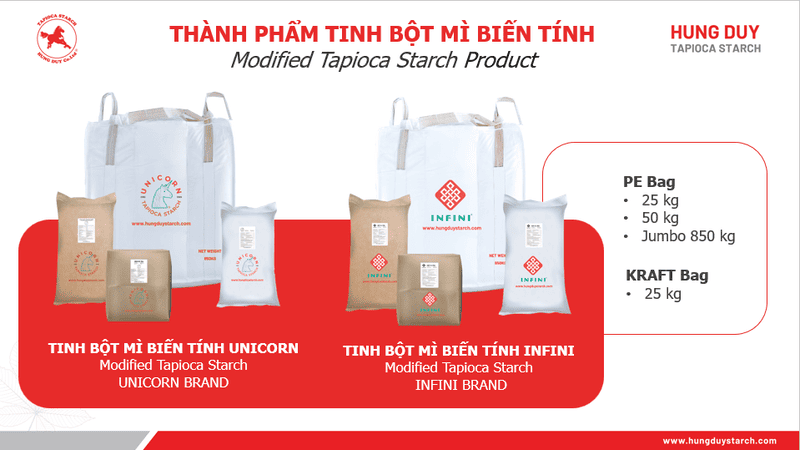
These products are marketed under the UNICONR and INFIN brands, with diverse packaging options (PE 10kg, 25kg, 50kg; Jumbo 850kg; Kraft bags 25kg), meeting the specialized needs of B2B customers and industrial manufacturers.
Hùng Duy Starch’s production system complies with international quality standards including FSSC 22000; HACCP; ISO 22000:2018; ISO 9001:2015; ISO 14001:2015; HALAL; and KOSHER. All products undergo strict periodic quality control at professional QC laboratories, with full COA and CO documentation, ensuring traceability and consistent quality.
Contact Hùng Duy Starch to explore suitable modified starch solutions for your business:
- Domestic Hotline: (+84) 913 320 365
- Export Hotline: (+84) 909 917 141
Please log in to leave a comment.