

Exporting tapioca starch to China: Key points to note
In the context of strong market fluctuations and the shift toward higher-value products such as modified starch, understanding the regulations, documentation, and conditions for cassava starch exports to China has become a critical factor for businesses. The following article summarizes the most important points to know when exporting to this major market. Join Hung Duy Starch to explore how to optimize processes and reduce risks for each shipment.
1. Overview of cassava starch exports to China in the first 10 months of 2025
Before diving into regulations and procedures, it is essential to understand the export landscape in the first 10 months of 2025 to see that the Chinese market offers great opportunities but also poses significant risks for Vietnamese enterprises.
1.1 Opportunities
In the first 10 months of 2025, China remained the primary market, consuming nearly all of Vietnam’s cassava starch exports, accounting for 92.9% of total export volume. Strong demand from ethanol, animal feed, and food industries significantly boosted export volume to over 3.16 million tons, up nearly 64% compared to the same period in 2024.
Notably, Vietnam surpassed Thailand to become China’s largest cassava starch supplier. In just 9 months, Vietnam exported more than 1.8 million tons, capturing nearly 49% of China’s import market share.
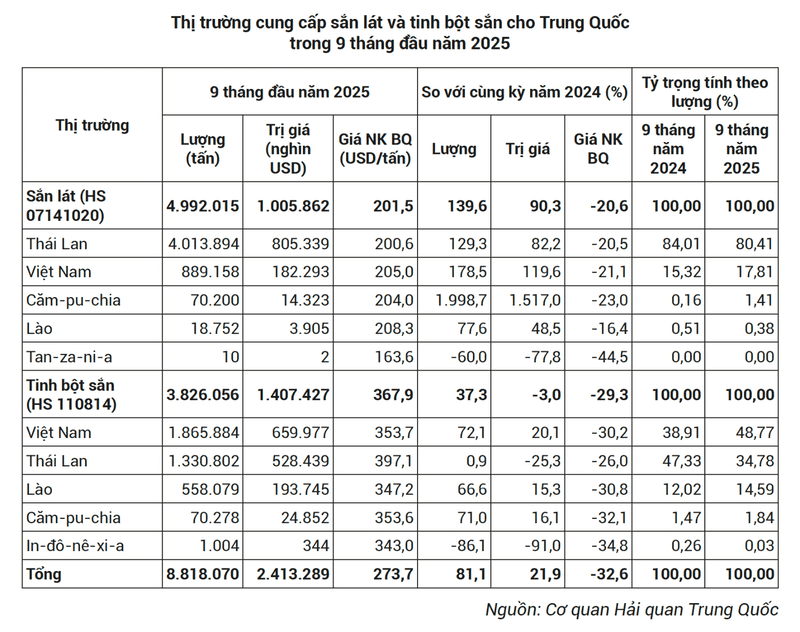
The market still has strong growth potential, especially as China continues to prioritize suppliers from geographically close countries with reliable logistics and stable production capacity like Vietnam. In just 8 months, China spent over USD 1.27 billion to import 3.45 million tons of cassava starch, with Vietnam contributing 1.65 million tons (nearly half of total imports).
1.2 Challenges
Despite strong export growth, Vietnam’s cassava industry faces significant pressure. The biggest challenge is the sharp decline in FOB prices, down about 30% year-on-year, bringing the average price to around USD 309/ton—the lowest in many years.
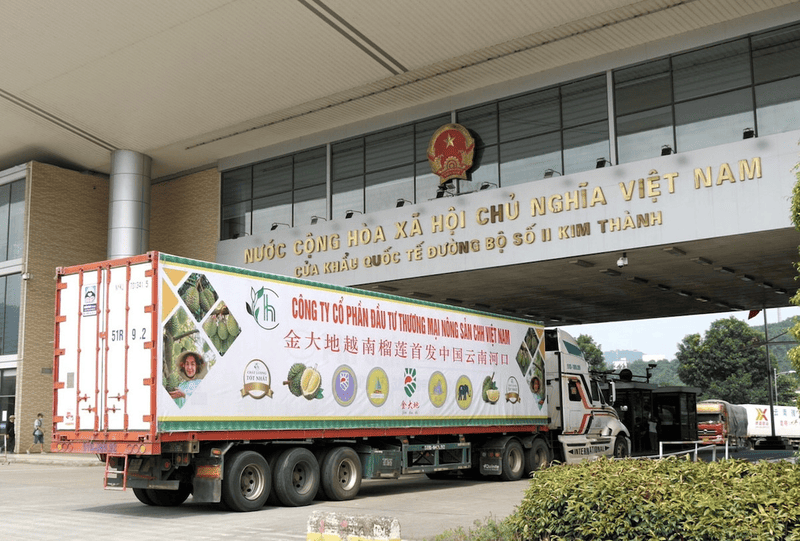
Heavy dependence on the Chinese market makes the industry vulnerable: any tightening of quarantine measures, changes in quality standards, or import policies can immediately impact the entire export chain and domestic purchasing prices.
Regional competition is also intensifying: Thailand remains a strong competitor with stable supply, while Laos and Cambodia are increasing exports at lower prices, giving China more alternative options. To maintain market share, many businesses are forced to sell at lower prices, putting heavy pressure on profit margins amid rising input costs, logistics expenses, and volatile domestic cassava prices.
Additionally, storms, delayed harvesting, and scattered farming areas have caused raw material shortages for many factories, preventing production cost reductions and further increasing pressure as export prices decline.
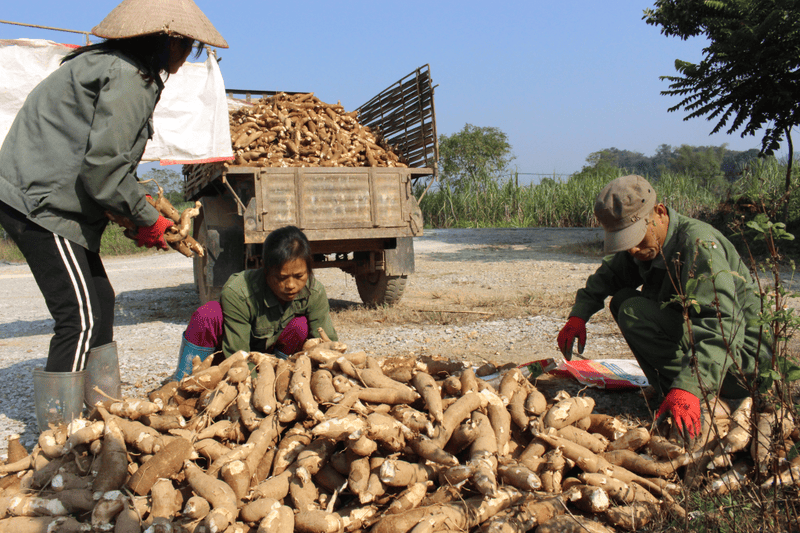
2. Minimum requirements for exporting cassava starch to China
On Vietnam’s side, cassava starch exports to China are governed by Circular 39/2018/TT-BTC on customs procedures, along with plant quarantine regulations under Circular 11/2021/TT-BNNPTNT and Circular 65/2012/TT-BNNPTNT.
China requires compliance with Decrees 248 and 249 of the General Administration of Customs of China (GACC), including registration for a GACC code for processing facilities to ensure traceability and food safety for imported cassava starch.
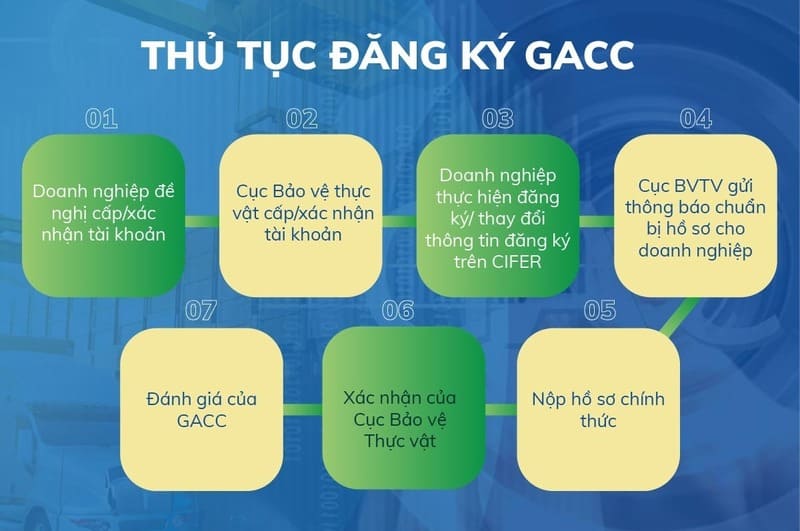
Based on these legal frameworks, cassava starch must meet the following minimum requirements for customs clearance into China:
- Packaging & labeling: Clearly state origin, processing facility name, production date, and intended use (food or industrial); must not be mixed with other products during packaging or transportation.
- Plant quarantine: Shipments must undergo quarantine as required by the importing country and obtain a phytosanitary certificate from the Plant Protection Department.
- Food safety criteria: Must comply with limits on SO₂ residues, heavy metals, molds, harmful microorganisms, and meet labeling requirements under export standards.
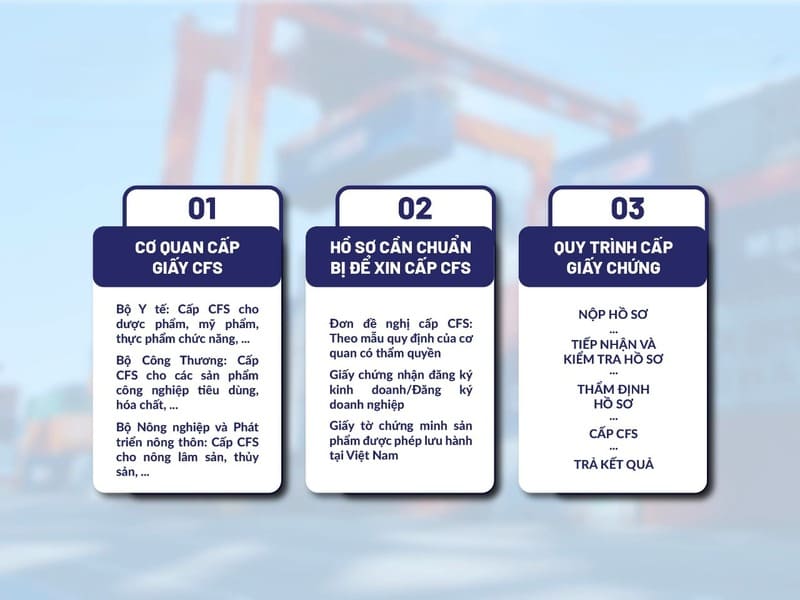
- Certificate of Free Sale (CFS): Proves the product is legally circulated in Vietnam and eligible for export.
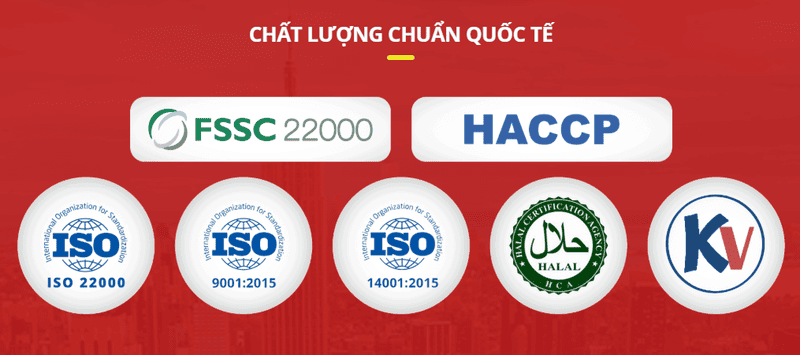
- Production facility requirements: Factories must meet food safety standards and apply systems such as HACCP and ISO 22000:2018.
- GACC registration: Production and processing facilities must be registered and approved under GACC system per Decrees 248/249.
3. Customs dossier and required documents for exporting cassava starch to China
Since cassava starch is not subject to specialized management lists or licensing requirements, enterprises shall follow standard export procedures as stipulated in Clause 5, Article 1 of Circular 39/2018/TT-BTC (amending Article 16 of Circular 38/2015/TT-BTC). The required customs dossier includes:
- Electronic customs declaration for export goods.
- Sales Contract between the Vietnamese exporter and the importing partner.
- Commercial Invoice.
- Packing List clearly indicating weight, specifications, and quantity of packages.
- Bill of Lading for sea shipments or equivalent transport documents (Air Waybill).
- Certificate of Origin (C/O), if required by the market or buyer to enjoy preferential tariffs.
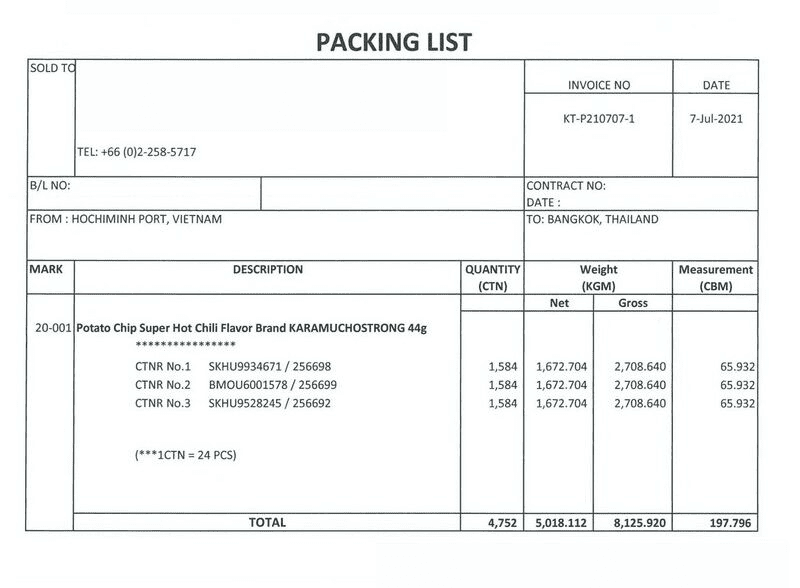
In addition, depending on contractual terms and importer requirements, enterprises may need to prepare additional certificates to meet technical requirements and reduce border control risks, including:
- Certificate of Free Sale (CFS): Issued under Decision 10/2010/QĐ-TTg, this certificate confirms that cassava starch is legally produced and circulated in Vietnam. The application dossier includes: a request form for CFS issuance (VN/EN) stating product name, HS code, applicable standards, importing country; business registration certificate or investment license; list of production facilities (if any); declared applicable standards and labeling/packaging presentation.
- Health Certificate (HC): Issued by the Ministry of Health under Circular 52/2015/TT-BYT, certifying that the product meets food safety requirements and does not contain harmful microorganisms, molds, heavy metals, or exceed permitted limits. The application dossier includes: HC request form (Appendix 08), test results of the shipment, product label samples, business registration certificate, and food safety dossier/declaration of conformity (if applicable).
- Phytosanitary Certificate: A mandatory certificate under Circular 11/2021/TT-BNNPTNT and Circular 65/2012/TT-BNNPTNT, confirming that the cassava starch shipment fully complies with China’s quarantine requirements. The application dossier includes: phytosanitary registration form, sales contract, Bill of Lading, Invoice, Packing List, authorization letter from the manufacturer (for trading companies), and shipment samples for inspection.
4. Latest procedures for exporting cassava starch to China in 2025
The export procedure for cassava starch to China includes the following main steps:
- Preparation of customs dossier and related documents: Enterprises prepare a complete customs dossier in accordance with Clause 5, Article 1 of Circular 39/2018/TT-BTC (amending Article 16 of Circular 38/2015/TT-BTC), along with documents required by the importer to meet food safety and quarantine standards.
- Registration for phytosanitary inspection: Enterprises submit the phytosanitary application to the Regional Plant Quarantine Sub-Department under the Plant Protection Department. The authority reviews the dossier, conducts sampling (if required), and issues a Phytosanitary Certificate as required by Chinese Customs.
- GACC registration for production facilities: Cassava starch manufacturing facilities must register on the CIFER system of the General Administration of Customs of China (GACC) under Decrees 248 and 249. Only after being approved and granted a registration code by GACC can enterprises legally export.
- Customs declaration and clearance: Enterprises submit declarations at the Customs Sub-Department where their headquarters/production site is located, where goods are consolidated, or at the export border gate. Customs authorities will verify registration conditions, review documents, and classify inspection channels:
- Green channel – declaration accepted, immediate clearance.
- Yellow channel – document inspection required.
- Red channel – document inspection and physical inspection of goods.
After completing all inspections and meeting requirements on quarantine, food safety, and valid documentation, the cassava starch shipment will be cleared for export.
5. Hung Duy Starch – A comprehensive cassava starch supplier with strong logistics and export capabilities
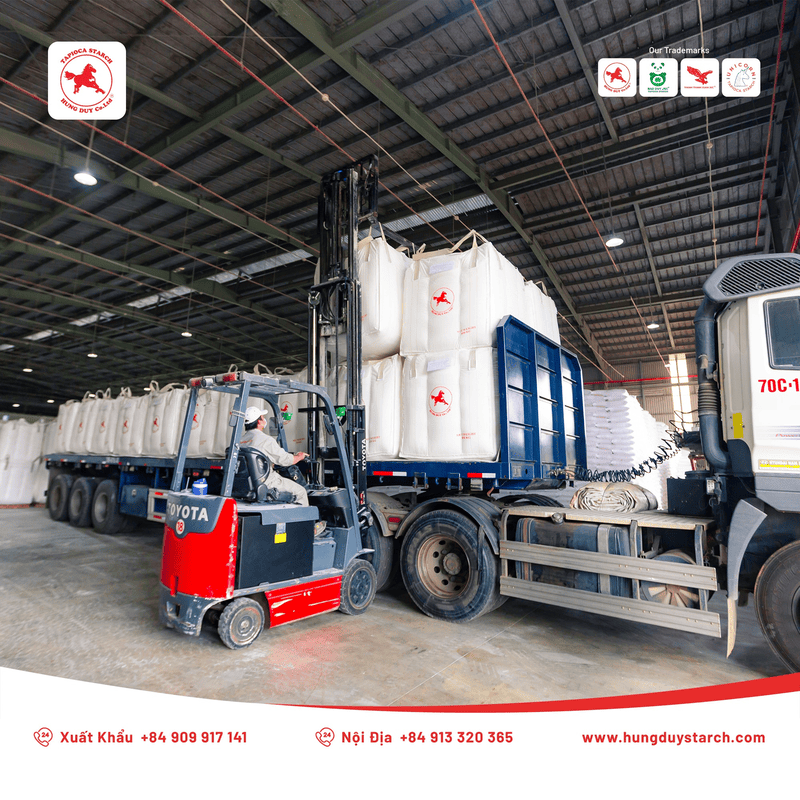
With a system of 6 factories located in Tay Ninh – the cassava capital of Vietnam – and a total capacity of up to 1,600 tons per day, Hung Duy Starch proactively controls its entire supply chain, ensures strict input–output quality control, and has built strong logistics and export capabilities to consistently meet the demands of both domestic and international customers. Our strengths include:
- Large and stable year-round supply, minimizing risks of shortages, delays, or quality fluctuations.
- Finished goods warehouse capacity of up to 50,000 tons, enabling flexible consolidation and shipment scheduling.
- Flexible delivery and payment terms in line with international standards (FOB, CFR, CIF, Door-to-door).
- Provision of a full set of export documents including Invoice, Packing List, CO, COA, Phytosanitary Certificate, Bill of Lading, etc., ensuring smooth customs clearance and compliance with importing market requirements.
- Extensive export experience to high-standard markets such as China, South Korea, Japan, Singapore, the United States, Europe, and Oceania.
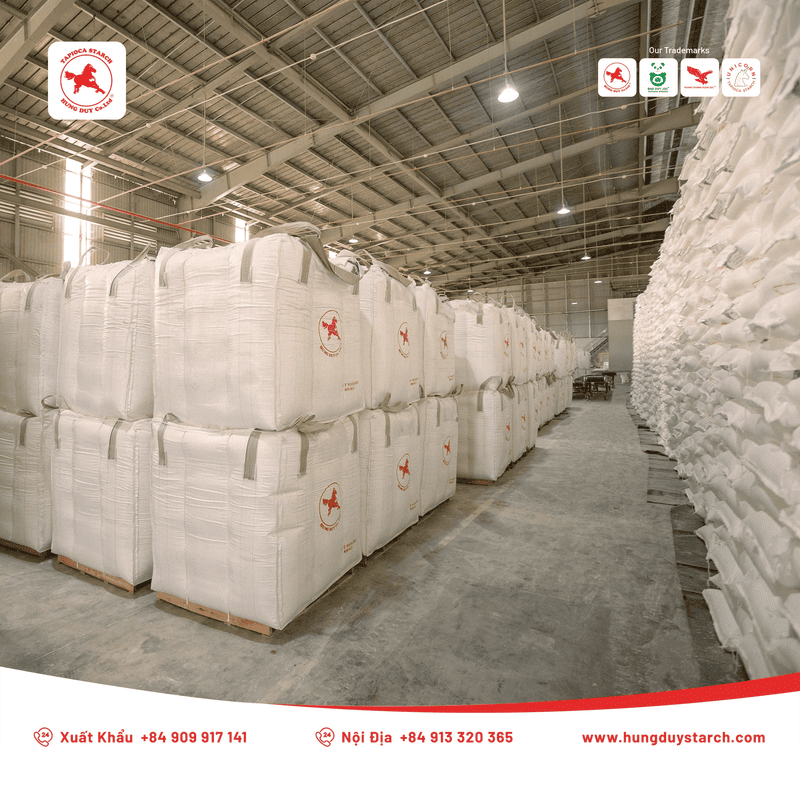
Hung Duy Starch offers a diverse product portfolio, including native and modified starch produced from 100% fresh cassava roots from Tay Ninh. All products are registered under CIFER (China Import Food Enterprise Registration). Before export, each shipment is strictly inspected by reputable organizations such as SGS, VinaControl, and Quatest 3. Therefore, customers can be assured of quality parameters such as whiteness, viscosity, moisture content, and microbiological indicators (TPC, Coliforms, E. coli),…
In summary, exporting cassava starch to China requires enterprises to thoroughly understand quality standards and prepare a complete set of documentation, including certificates of origin, phytosanitary certification, and food safety compliance, to minimize clearance risks. With comprehensive production, supply, and export capabilities, Hung Duy Starch fully meets all requirements for quality, traceability, and stable supply for every order.
Contact Hung Duy Starch:
- Domestic Hotline: (+84) 913 320 365
- Export Hotline: (+84) 909 917 141
Please log in to leave a comment.