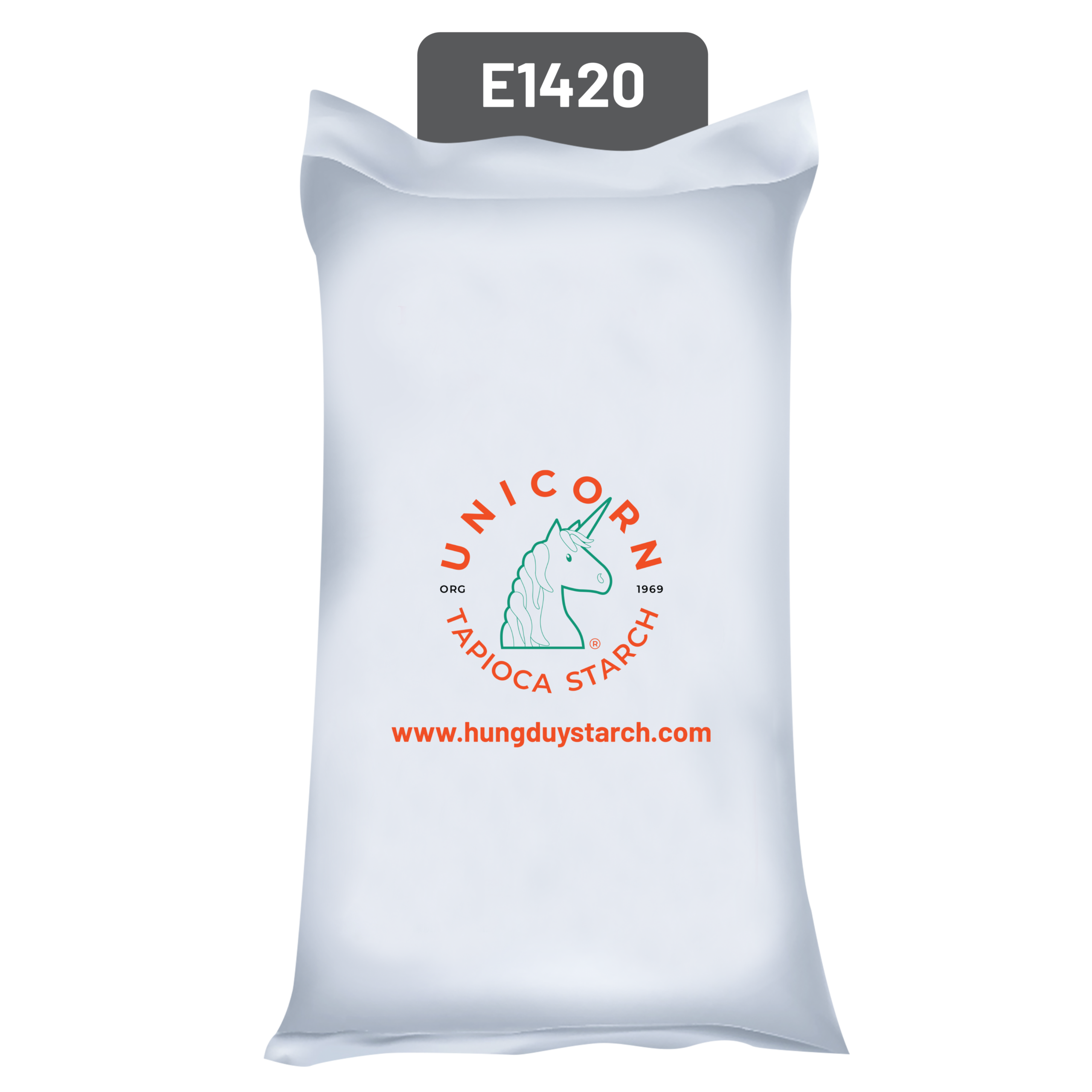
E1420 Acetylated Starch – Infini
E1420 Acetylated Starch is a modified tapioca starch produced by acetylation, improving structural stability and reducing retrogradation and syneresis during heating, storage, and freeze-thaw processes. The product provides stable viscosity, high clarity, and good moisture retention.
E1420 modified tapioca starch is suitable for applications in noodles, frozen foods, sauces, soups, processed foods, and products requiring soft, elastic texture, stability, and high processing efficiency.




E1420 – Acetylated Starch is a single modified starch notable for its ability to stabilize structure, prevent syneresis, and improve product quality in various food processing applications, especially frozen foods, instant noodles, baked goods, and sauces. This article by Hùng Duy Starch helps you understand what E1420 is, its chemical structure, key characteristics, practical applications, and why businesses choose acetylated starch as a stable, safe, and efficient technological solution.
1. What is E1420?
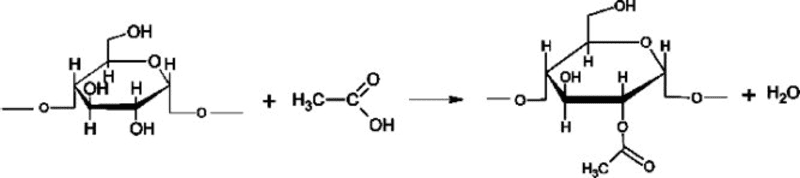
E1420 (Acetylated Starch) is a natural starch (from corn, potato, cassava, etc.) modified through a single acetylation reaction. In this process, agents such as acetic anhydride or vinyl acetate attach acetyl groups (-COCH₃) to the hydroxyl groups (-OH) on the polysaccharide molecule, helping the starch reduce syneresis, maintain viscosity, and preserve its structure under high heat, strong agitation, or mechanical treatment.
According to international classification systems, E1420 is the designation for Acetylated Starch under the European Union (EU) food additive regulations. In the FAO/WHO Codex Alimentarius, it is identified as INS 1420. It is also known as Starch acetate.
2. Chemical structure of E1420
E1420 is essentially starch esterified at the free hydroxyl (-OH) groups on the glucose units. During this process, the starch reacts with acetic anhydride or vinyl acetate to form acetyl groups (-O-COCH₃), primarily at positions C-2, C-3, and C-6 of the glucose ring.
This esterification enables E1420 to form smooth, stable starch pastes that are resistant to syneresis and maintain uniformity even under high heat, strong agitation, or mechanical processing. The entire process is controlled under GMP principles to ensure an appropriate degree of acetylation for the desired technological effect, while remaining safe and stable in the final product.
3. Key properties of Acetylated Starch E1420
E1420 exhibits outstanding properties that enhance starch stability during processing and storage compared to native starch:
- Improved freeze–thaw stability and structural integrity (core advantage), helping products maintain soft texture longer and reduce syneresis during cooling or refrigerated storage.
- Lower gelatinization temperature, reducing cooking time and saving energy.
- Improved clarity and viscosity of starch pastes.
- Enhanced water and oil absorption, as well as swelling capacity.
- Increased water retention and gel formation.
- Emulsion stabilization, improving smoothness and texture of oil–water mixtures.
- Contributes to nutrition as resistant starch type 4 (RS4), supporting gut microbiota.
Note that while excellent for cold storage, E1420 is a single modified starch with relatively low heat and mechanical resistance because the starch granule structure is “loosened” by acetyl groups without reinforcement (e.g., cross-linking). Under high heat or strong agitation, starch granules may break down, reducing viscosity and stability. Therefore, in practice, E1420 is often combined with other modified starches (such as E1414 or E1422) to create dual-modified starch with improved stability.
4. Industrial applications of E1420
E1420 (acetylated starch) is widely used across various food products and industries, including:
- Instant noodles, rice noodles, pho (enhancing chewiness and elasticity; reducing breakage; adding shine to strands; stable during frying).
- Noodle and pho broths (controlling viscosity).
- Frozen buns, frozen wontons, frozen spring rolls.
- Frozen cakes, frozen vegetables, frozen snacks.
- Popsicles, ice cream, frozen yogurt, chilled puddings.
- Sauces: tomato sauce, meat sauces, cream sauces, cheese sauces.
- Packaged soups and condensed soups.
- Steamed or baked sausages, hams, minced meat products.
- Bread, pastries, puff pastries, crackers.
- Fried snacks and puffed snacks.
- Tempura batter, breading for seafood, chicken, vegetables.
- Pizza toppings, sweet and savory fillings, ready-to-use fillings.
- Salad dressings, custard, low-fat mayonnaise.
- Dairy beverages, plant-based milk, juices, protein drinks.
- Instant porridge, nutritional powders, soluble cereal powders.
- Low-fat or fat-substitute foods (mayo, dressings, low-fat yogurt).
- Dietary, nutritional, or children’s foods (RS4 applications).
- Paper industry (coating adhesives, surface starch), textiles, bioplastics, and bio-based adhesives.
5. High-quality E1420 Acetylated Starch manufacturer
With over half a century of experience in the wheat starch industry, Hùng Duy Starch is a pioneer in Vietnam in producing modified wheat starch, including E1420 Acetylated Starch. Advanced production and R&D capabilities combined with international trade experience enable Hùng Duy to supply consistent starch products that meet high technical standards for modern food and industrial applications.
Key strengths of Hùng Duy Starch:
- Leading production & modified starch technology: Pioneer in Vietnam, producing over 20 types of modified wheat starch, ensuring stability, purity, and technical properties suitable for diverse food and industrial applications.
- Advanced R&D to optimize starch properties for each sector: Over 55 years of experience with a skilled technical team ensuring desired viscosity, anti-syneresis, and thermal/mechanical stability. Capable of developing products precisely meeting instant noodle, frozen food, sauce, beverage, and snack production needs.
- Strong international trade – understanding global standards: Years of collaboration with partners in the USA, Europe, Japan, Australia, and Asia; experience exporting to strict markets, ensuring quality, documentation, and logistics meet international standards.
- Large-scale, stable supply chain & logistics: 50,000-ton warehouse system with flexible domestic and international logistics (FOB/CFR/CIF/Door-to-door), optimizing operations and reducing risks for food production chains.
If your business is seeking internationally standardized, stable, and long-term supply of modified starch like E1420, the Hùng Duy Starch technical team is ready to assist. Contact us for advice on the most suitable products for your processes and applications.
- Domestic hotline: (+84) 913 320 365
- Export hotline: (+84) 909 917 141