E1404 Oxidized Starch – Infini
E1404 Oxidized Starch is a modified tapioca starch processed by oxidation, which improves molecular structure and enhances performance compared to native tapioca starch. The product has low viscosity, high clarity, good film-forming ability, and stability during storage.
E1404 is widely used in food processing and manufacturing industries, paper and packaging industry, textile and dyeing industry, production of adhesives and binders, etc., effectively meeting requirements for quality, stability, and production efficiency.





E1404 – Oxidized Starch is an indispensable functional ingredient thanks to its stability, clarity, and excellent film-forming ability. In this article, Hùng Duy Starch explores what E1404 is, its key properties and applications, and why global businesses trust oxidized starch as an internationally standardized raw material solution across various industries.
1. What is E1404?
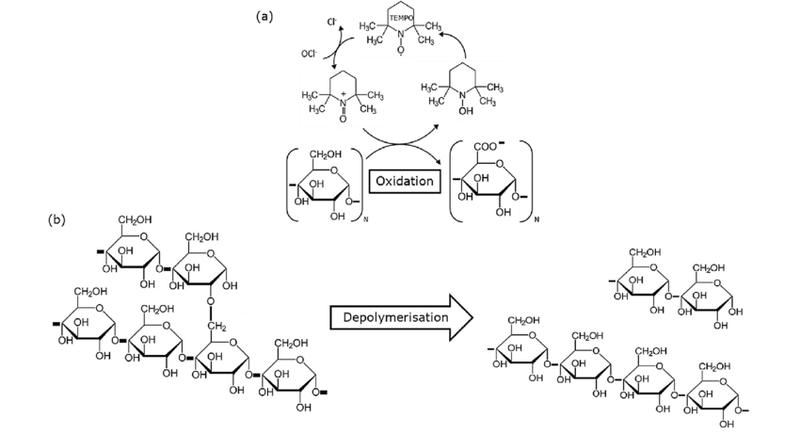
E1404 is a natural starch (such as corn, potato, cassava, etc.) that has undergone controlled chemical treatment under Good Manufacturing Practice (GMP) standards using sodium hypochlorite (NaOCl) – a strong oxidizing agent – to selectively introduce carboxyl (-COOH) groups. After oxidation, the starch can be further treated with acids, alkalis, enzymes, or bleaching to adjust characteristics such as solubility, clarity, viscosity, gelation, and stability during heating or storage.
According to international classification, E1404 is the designation for oxidized starch under the European Union (EU) food additive system. In the FAO/WHO Codex Alimentarius, it is identified as INS No. 1404. Beyond these two common codes, oxidized starch is also known as Oxidized Starch or Oxidised Starch (US/UK spelling).
2. Chemical Structure of E1404
Oxidation of starch with NaOCl converts free hydroxyl (-OH) groups on glucose units (mainly at positions C-2, C-3, and C-6) into carbonyl (C=O) and carboxyl (-COOH) groups. The double-helical chains of amylopectin and the amylose linkages are partially broken, softening the starch granules, improving solubility, producing a thin slurry, and forming soft yet stable gels with minimal degradation. The –COOH groups give the starch molecules a negative charge in neutral or slightly alkaline environments, enabling strong interactions with other ingredients and helping maintain texture, thicken, and stabilize products such as confectionery, puddings, ice cream, sauces, soups, baby foods, and frozen products.
3. Key Properties of Oxidized Starch E1404
- E1404 has a characteristic bright white color, with whiteness proportional to the degree of oxidation.
- It can enhance the porosity and smoothness of food textures.
- Compared to native starch at the same concentration, E1404 slurry exhibits lower viscosity, especially when hot.
- Desired consistency is achieved quickly with minimal cooking time.
- After cooking, E1404 starch gel is highly clear, improving the appearance of products such as gummies or clear sauces.
- Oxidized starch maintains smooth texture and viscosity longer, resisting thickening, hardening, syneresis, or skin formation during storage.
- E1404 forms thin, soft, glossy, smooth, and uniform films when dried, which dissolve easily in water, resist moisture absorption, and have high mechanical strength.
4. Prominent Applications of E1404 Oxidized Starch
E1404 oxidized starch is a versatile industrial ingredient, widely used in both food and non-food industries:
- Confectionery, jelly, and desserts (most common use): Used for glossy coatings on gummies and chewy candies; forms soft, clear gels for jelly, pudding, and flan; supports structure in spongy cakes; can replace gelatin in vegetarian candies.
- Sauces, yogurt, and dairy products: Thickens and stabilizes tomato sauce, salad dressings, milk, yogurt, and ice cream; prevents separation and maintains smooth viscosity during storage.
- Batter and processed meat: Helps create thin, uniform, and crispy coating; acts as a binder and water-retention agent in sausages, ham, and canned meat.
- Beverages, jams, and seasonings: Enhances viscosity and mouthfeel; stabilizes structure in jams, seasoning powders, and other high-stability products.
- Paper & packaging: Surface sizing to make paper smooth, glossy, and durable; improves printability; used as adhesive in cartons, paperboard (including frozen cartons), and in pulp production.
- Textiles: Sizing fibers to increase strength, stiffness, and reduce abrasion during weaving.
- Pharmaceuticals: Used as disintegrant, filler, and binder in tablets and capsules.
- Construction: Acts as a binder in gypsum boards, enhancing adhesion and material strength.
5. Trusted Manufacturer & Supplier of E1404 Oxidized Starch for Industrial Applications
With over 55 years in the Vietnamese wheat starch industry, Hùng Duy Starch has developed international-standard production capabilities for modified starches, meeting stringent technical requirements across industries. Operating a production system in the Tây Ninh raw material region and maintaining a sustainable Vietnam–Cambodia supply chain, Hùng Duy ensures consistent quality, stable output, and supply autonomy for E1404 oxidized starch.
Distinct strengths of Hùng Duy Starch:
- Strong international export capability: Able to export officially to high-standard markets such as the US, EU, and Japan; familiar with international trade, quarantine, and documentation requirements, optimizing processes for global customers.
- Large-scale logistics & warehousing system: 50,000-ton finished goods storage, able to deliver under various Incoterms (FOB/CFR/CIF/Door-to-door) and ensure stable year-round supply, avoiding seasonal disruptions.
- Stable cross-border raw material supply: Strategic link with Tây Ninh raw materials and Cambodian partners; experienced in cassava procurement and import, with deep knowledge of border trade, ensuring abundant, high-quality raw materials.
- Leading R&D and modified starch production capabilities: Pioneer in Vietnam’s modified starch technology; successfully developed over 20 international-standard products, including E1404, widely trusted in food and non-food industries.
If your business requires optimized oxidized starch solutions for industrial production, contact Hùng Duy Starch’s technical and export team for support.
- Domestic hotline: (+84) 913 320 365
- Export hotline: (+84) 909 917 141