Native Tapioca Starch
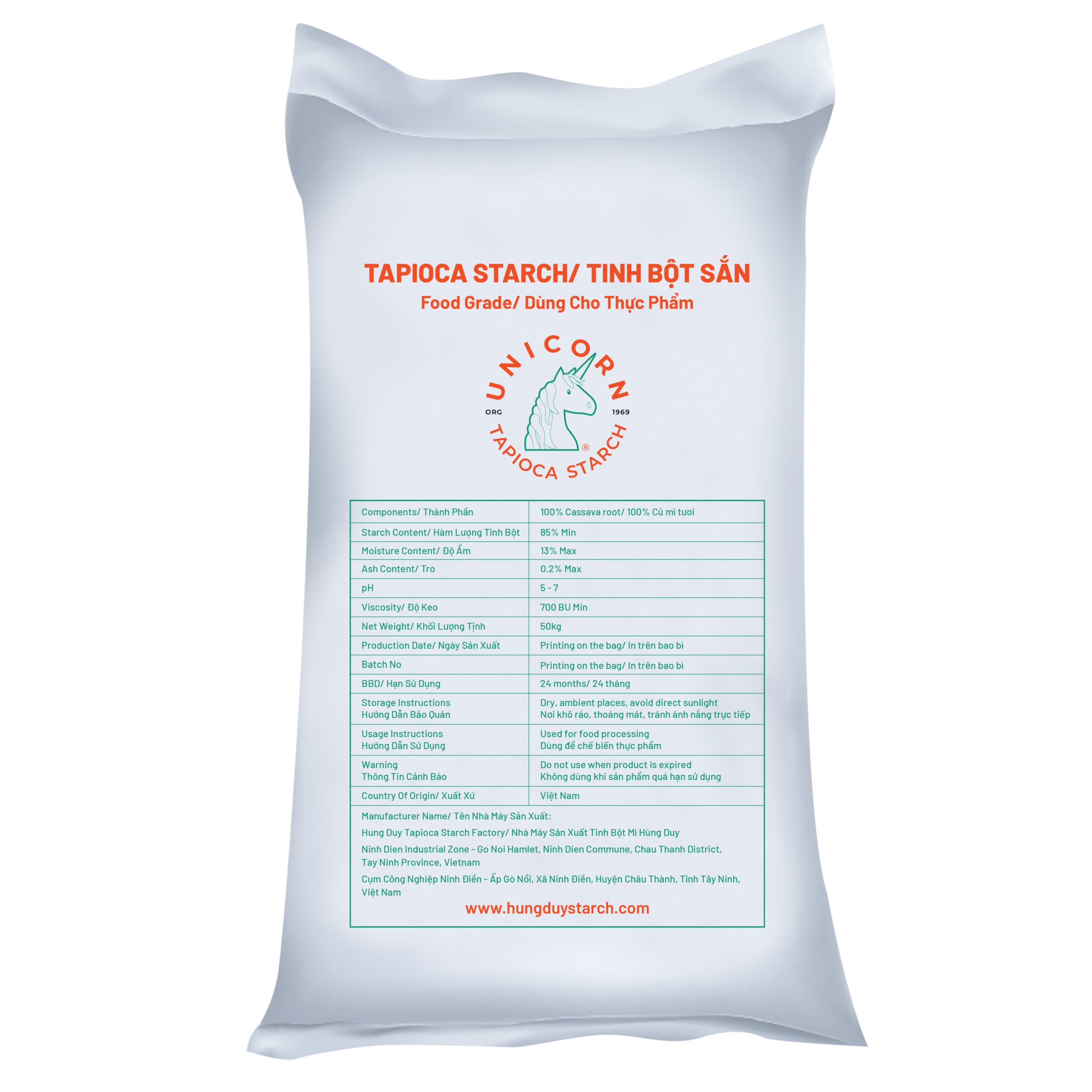
Native tapioca starch is a core raw material across multiple industries thanks to its high whiteness, neutral properties, and excellent thickening and binding capabilities. Understanding its characteristics and applications helps businesses optimize formulations and production efficiency. In the following article, Hung Duy Starch explores the full properties, applications, and advantages of native tapioca starch in modern industrial production.
1. What is Native Tapioca Starch?
Native tapioca starch—also known as native cassava starch—is a fine white powder extracted 100% from fresh cassava roots without chemical or physical modification. In international trade, it is commonly referred to as Native Tapioca Starch or Native Cassava Starch. This is a high-value raw material widely used in food, beverages, paper, textiles, adhesives, biodegradable packaging, and thousands of other industrial applications.
**Note: In some common sources, terms such as “refined flour,” arrowroot powder, or wheat flour are sometimes confused with native tapioca starch. However, in industrial production, these are completely different materials. Proper distinction is essential for selecting the right ingredient for processing, formulation design, and application development.
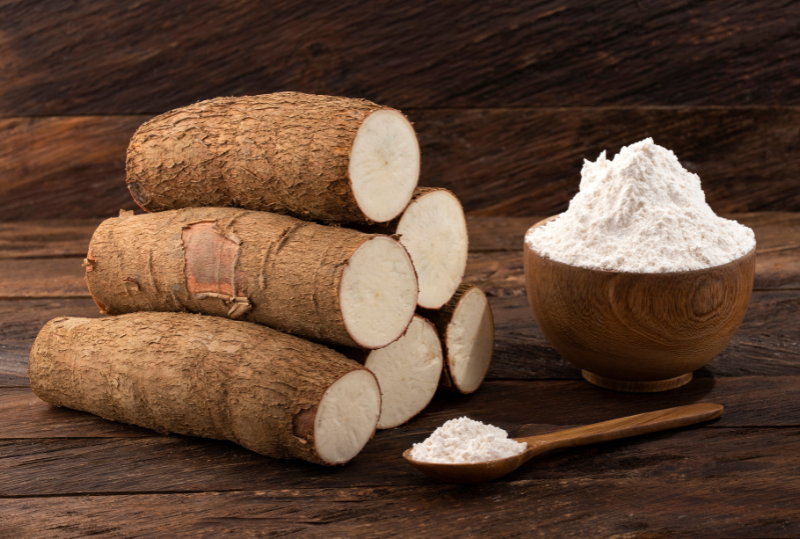
2. Key Characteristics of Native Tapioca Starch
- The amylose content of native cassava starch typically ranges from 17–20%, with the remainder primarily short-chain amylopectin (less than 1% very long chains). Its molecular structure is less branched than that of corn, rice, or wheat starch.
- Native tapioca starch granules are spherical with smooth surfaces, measuring 4–35 µm in diameter and consisting of multiple thin layers (~0.2 µm).
- High purity with very low levels of protein, fat, and ash.
- Contains a small amount of phosphorus but not in phosphate ester form like potato starch.
- Exhibits strong gelatinization when heated with water; granules swell rapidly to form a viscous, elastic paste.
- Upon cooling, amylose reassociates to form a soft, moderately elastic gel, characteristic of native starch behavior.
3. What is the Difference Between Cassava Flour and Native Tapioca Starch?
Cassava flour and native tapioca starch differ mainly in processing level, composition, and functional properties. The table below highlights the key differences:
| Criteria | Cassava Flour | Native Tapioca Starch |
| Definition | Coarse flour made by grinding whole cassava roots, retaining most of the natural structure. | Unmodified starch extracted from cassava with fiber and impurities removed, preserving its native structure. |
| Processing | Grinding → sieving → drying (retains natural structure). | Grinding → fiber separation → repeated washing → filtration → drying (no chemical modification). |
| Composition | Contains starch, fiber, and small amounts of protein and natural components. | Nearly 100% pure native starch. |
| Structure | Moderate fineness with residual fiber and organic matter. | Fine, smooth starch granules; natural functionality with high viscosity and strong gelatinization. |
| Main Applications | Cooking, baking, traditional dishes, and household use. | Thickener, stabilizer, and binder in food, beverages, pharmaceuticals, paper, textiles, adhesives, and biodegradable packaging. |
4. Advantages of Native Tapioca Starch Produced in Tay Ninh
With basalt and grey soils, stable warm climate, and abundant water resources, Tay Ninh enables near year-round cassava cultivation and harvesting, achieving one of the highest yields nationwide at approximately 33.2 tons/ha (2021–2024).
Cassava roots from this region maintain a starch content of around 30%, offering high extraction efficiency, consistent whiteness, and suitability for industrial technical requirements. The province also implements disease-resistant cassava breeding programs, ensuring stable raw material quality across seasons.
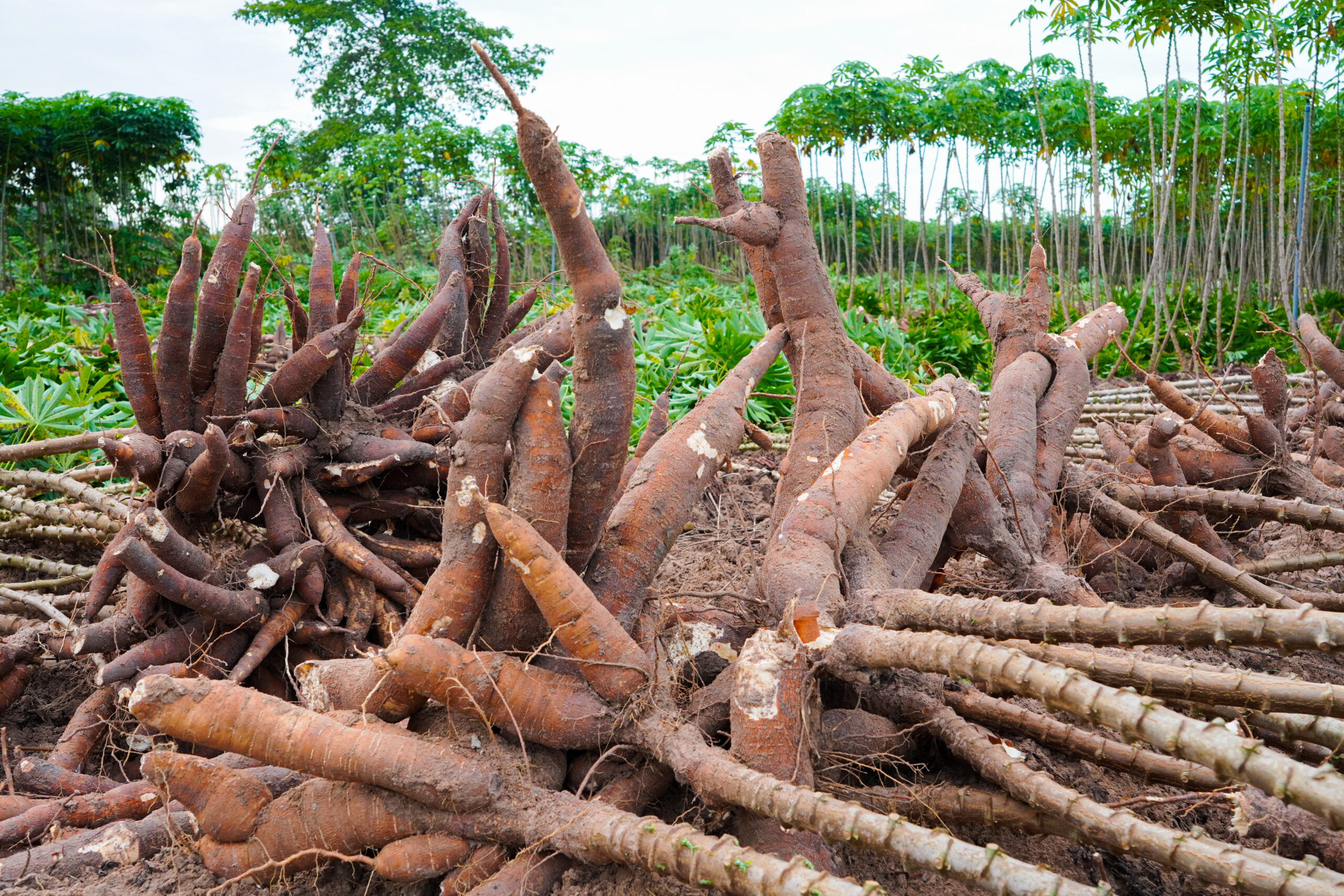
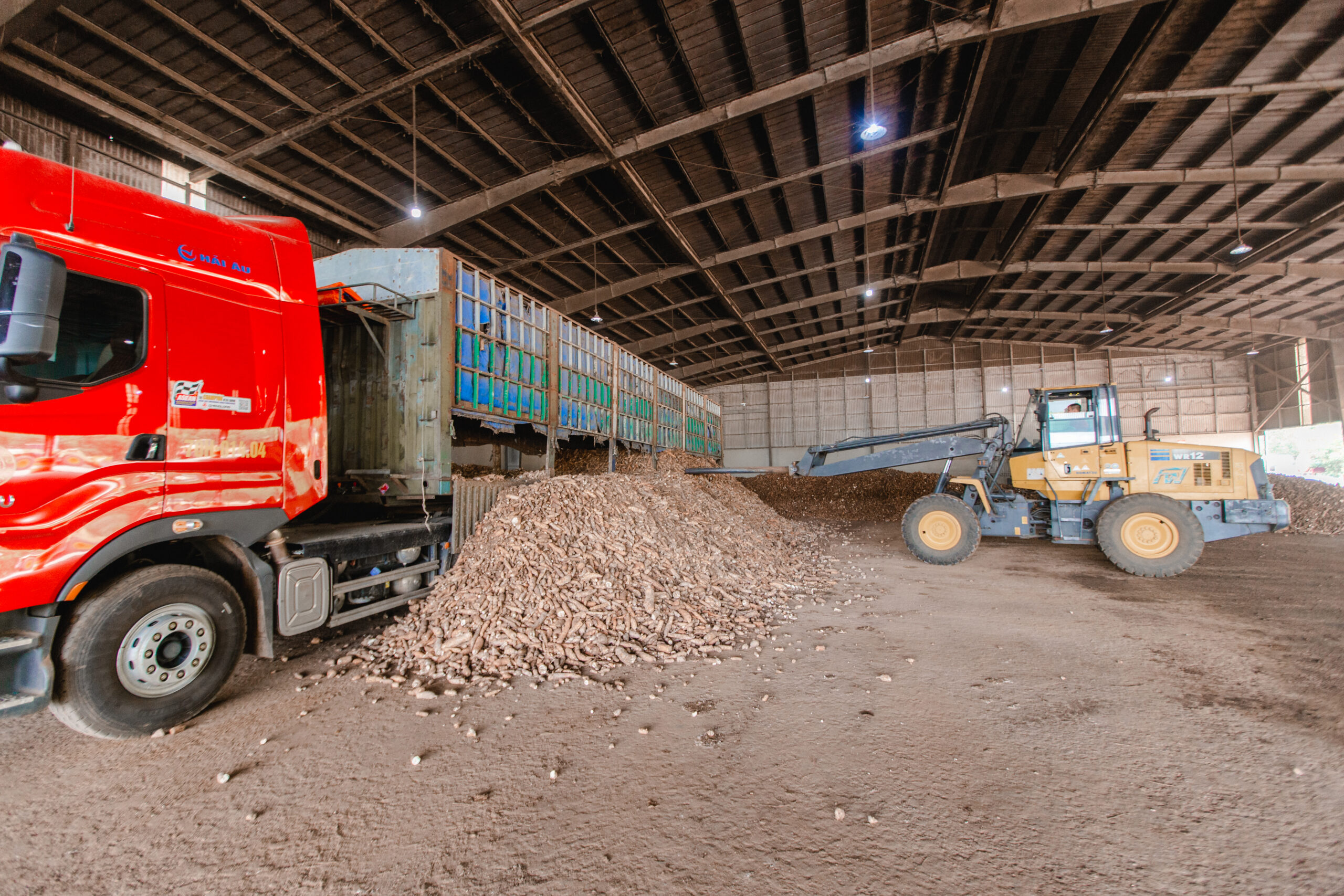
By directly owning and operating six factories located within Tay Ninh’s cassava-growing regions, Hung Duy Starch maximizes the advantages of fresh raw materials. Proximity to farms shortens harvesting-to-processing time, ensuring cassava is processed at peak freshness—critical for maintaining starch content, whiteness, and viscosity stability of native tapioca starch.
Through long-term purchasing agreements with farmers, Hung Duy Starch ensures a stable year-round supply, minimizing seasonal fluctuations and maintaining consistent quality across batches.
5. Applications of Native Tapioca Starch in Food and Industry
Native tapioca starch is widely used due to its neutrality, stability, gluten-free nature, and clean-label characteristics without chemical modification. Key applications include:
- Food applications: Enhances chewiness and clarity in noodles, vermicelli, rice noodles, and tapioca sheets; improves texture and moisture retention in bakery and gluten-free products; acts as a natural thickener in soups, sauces, and canned foods; creates crispness in snacks; improves binding in processed meats; serves as the main ingredient for tapioca pearls; adds light viscosity to beverages; and is used in dextrin production.
- Paper industry: Used as filler, binder, and surface coating to improve smoothness, gloss, strength, and printability.
- Textile industry: Applied in yarn sizing, fabric finishing, printing, and dyeing; functions as a natural adhesive in textile processing.
- Adhesives: Used in packaging glue, corrugated board adhesives, bookbinding, labels, wood glue, laminating adhesives, and various starch-based adhesives.
- Pharmaceutical industry: Functions as filler, binder, and disintegrant; stabilizes syrups and suspensions; used in coatings and fast-disintegrating tablets.
- Cosmetics: Provides smooth texture, oil absorption, and improved application in powders, creams, lotions, and personal care products.
- Construction materials: Used as an additive in concrete, binder in clay and limestone, and in gypsum boards and coatings.
- Modified starch production: Serves as the base material for producing modified starches such as E1404, E1414, E1420, and E1422.

6. Hung Duy Starch – Leading Native Tapioca Starch Exporter in Vietnam
With over half a century of experience, Hung Duy Starch is a professional native tapioca starch manufacturer under Hung Duy Group, operating six large-scale factories in Tay Ninh along with a strong logistics and export-import system. With a production capacity of 1,600 tons/day and an optimized distribution network, the company is a trusted partner for modern industries worldwide.
Key advantages of Hung Duy Starch:
- Strong and stable production capacity: Six modern factories located in raw material regions, ensuring consistent quality and year-round supply.
- Large-scale warehousing system: 50,000-ton capacity, enabling efficient storage and fast order fulfillment.
- Professional logistics & export expertise: Over 30 years of experience handling documentation and compliance for demanding markets such as the U.S., Europe, Japan, and Australia.
- International quality standards: Certified with FSSC 22000, HACCP, ISO 22000:2018, ISO 9001:2015, HALAL, and KOSHER.
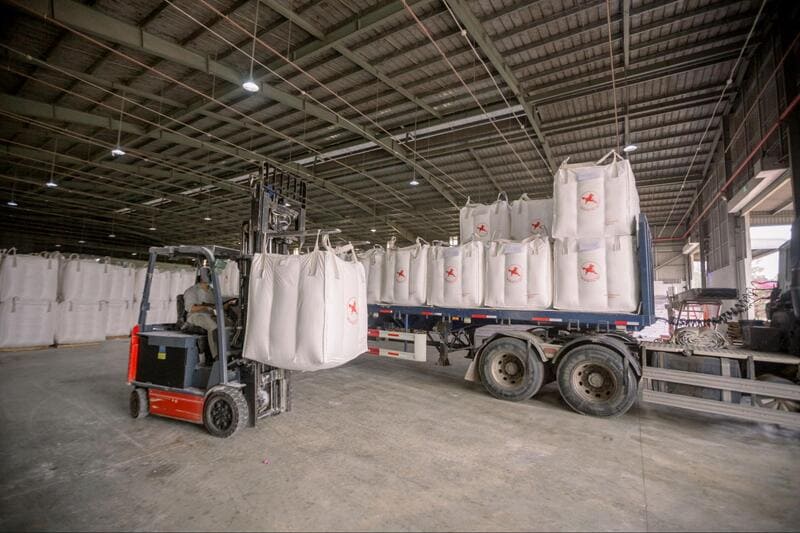
Hung Duy offers a structured product portfolio segmented by quality and application:
- Unicorn: Premium-grade starch with superior whiteness and purity, ideal for high-standard industries and export.
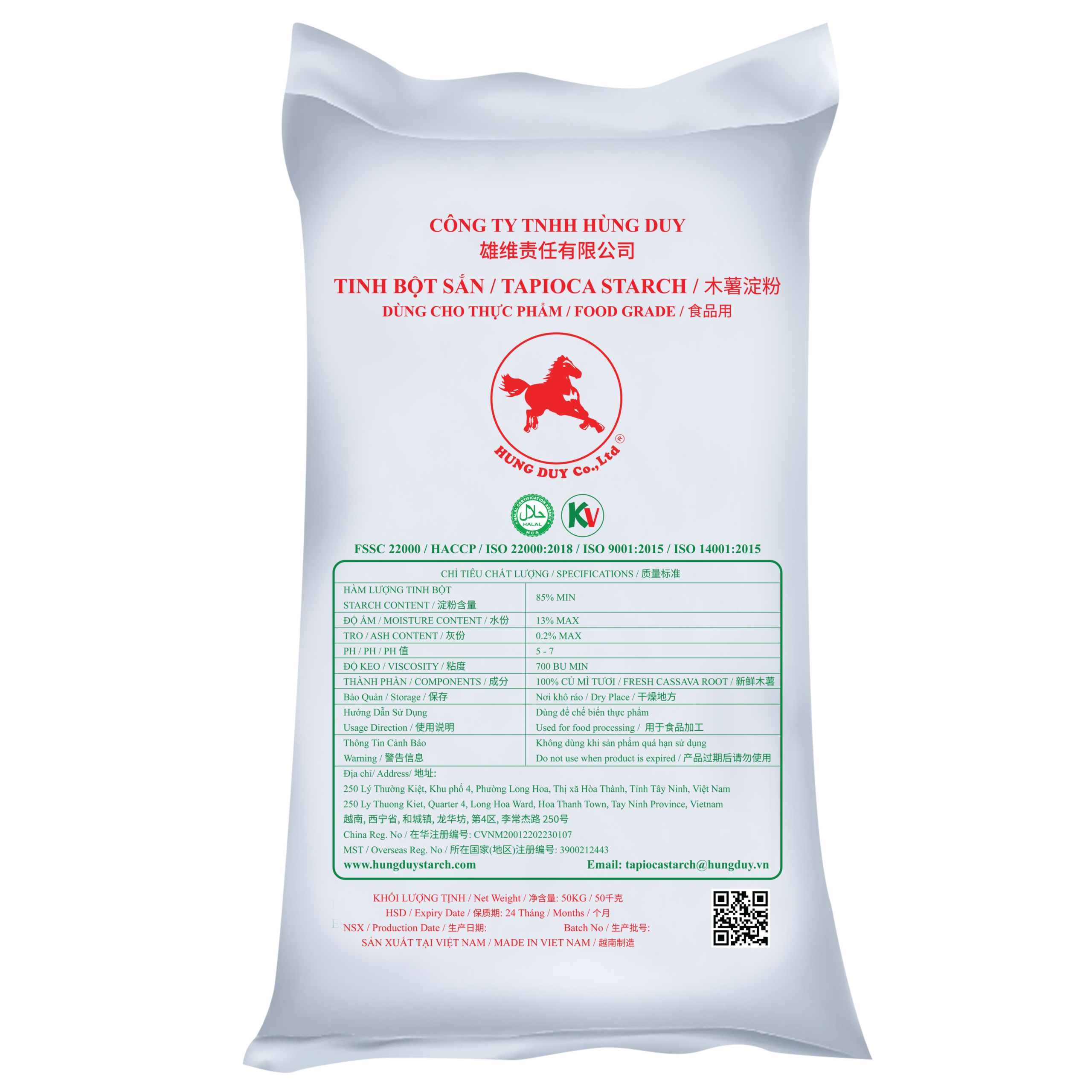
- Red Horse: Established brand with stable quality for food and industrial applications.
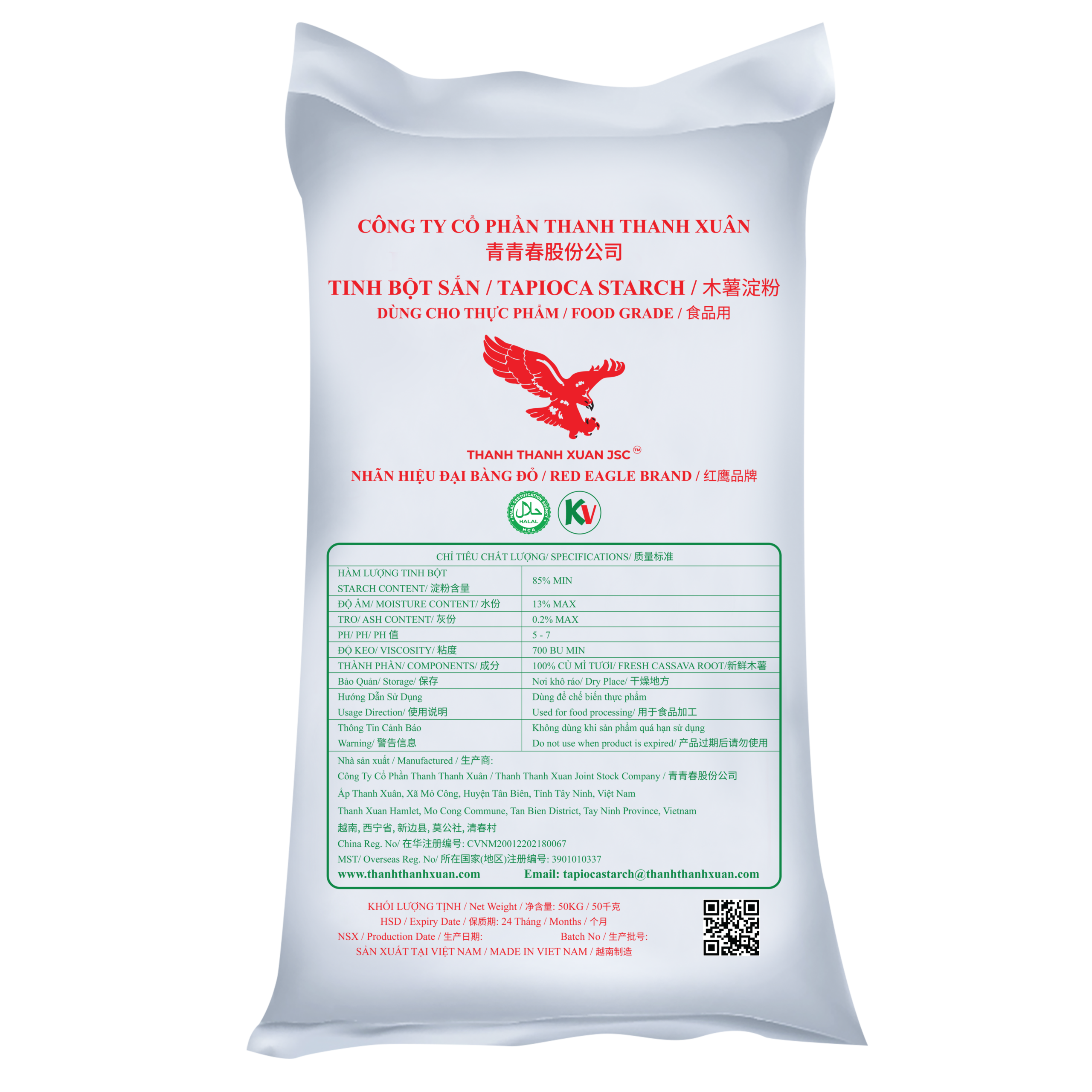
- Red Eagle: Cost-effective option with reliable performance for large-scale manufacturing.
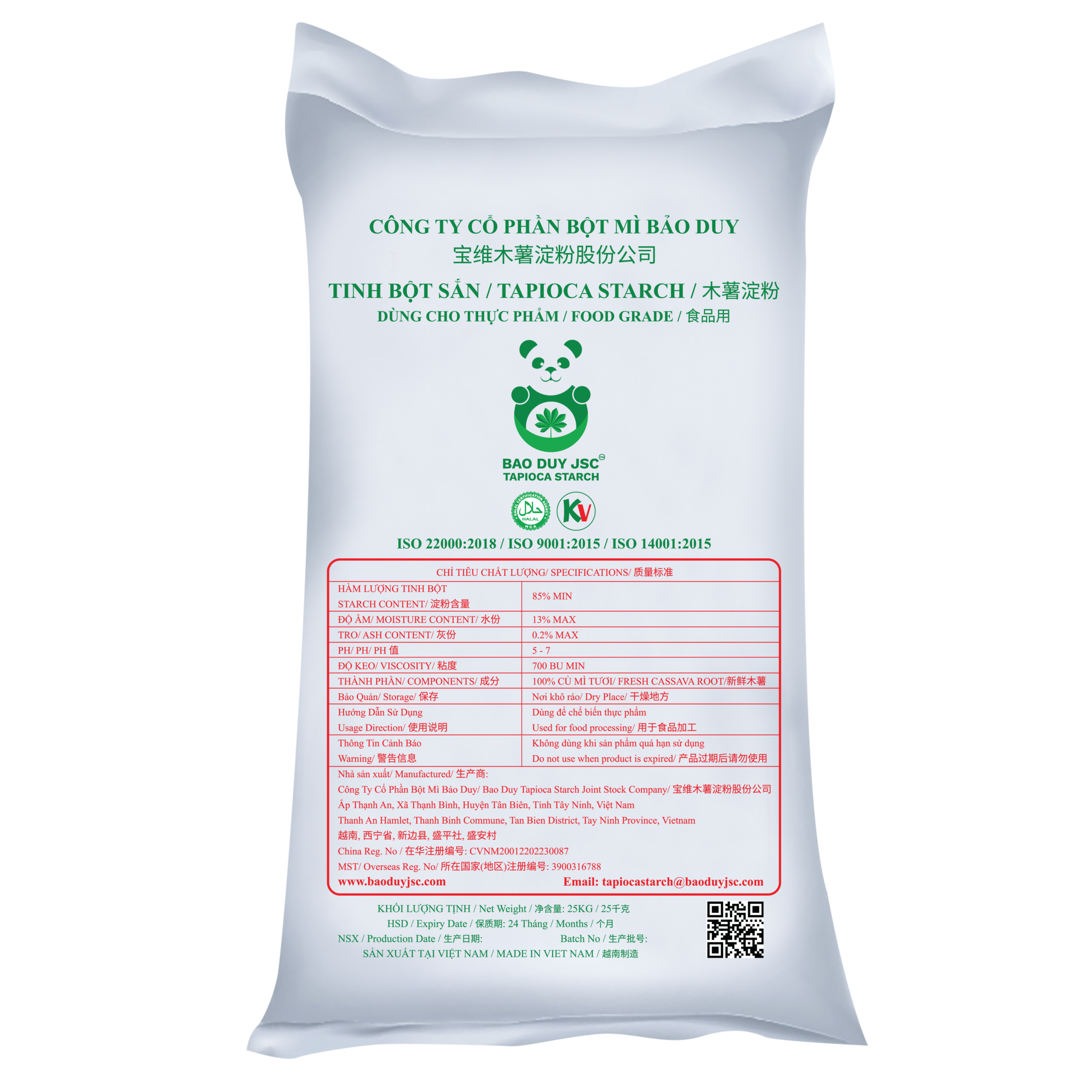
- Panda: Standard-grade starch with competitive pricing for diverse applications.
Products are available in various packaging options including PE bags (10 kg, 25 kg, 50 kg), Kraft bags (25 kg), and Jumbo bags (850 kg), meeting the needs of SMEs, distributors, and large-scale industrial manufacturers.
With strict QA/QC processes and regular testing by reputable organizations such as SGS, China Inspection, VinaControl, and Quatest 3, every batch meets international standards and ensures consistency. Full documentation including Invoice, Packing List, CO, COA, Phytosanitary Certificate, and Bill of Lading is provided for seamless traceability and customs clearance.
If you are looking for high-quality native tapioca starch with stable supply and optimized performance for large-scale production, contact Hung Duy Starch for consultation, quotations, and samples.
- Domestic Hotline: (+84) 913 320 365
- Export Hotline: (+84) 909 917 141